

A few weeks ago we featured a book called Community Evolved which explore the past decade of Halo's fan community and features interviews from respected members that have made significant contributions to it. The authors wanted to explore every aspect of the community from professional e-sports players to forgers. Through the eyes of Halo community leaders, this book showcases the various transformations the community has undergone in the first decade of its existence.
ForgeHub has been given exclusive permission to share one of its chapters with the public and we think it covers a topic you will be very fond of, Forge. The passage we are sharing is intended as a preview experience only and does not contain all of the forge related content. You can read the rest of the book by purchasing it online which we will provide details for below.
CONTROLLER AND ANVIL
In early Halo titles, players didn’t have many options to customize the multiplayer experience. Different gametypes that shipped with Halo 1 and 2 came with a few preset customizable options—changing what types of weapons appeared on the map, or how long a game round would last. Halo 3 came with a suite of features that were quite novel among console games of the time, and dramatically expanded the options players had to customize their experience. Among them was an object editor called Forge, which allowed players to move, add, or replace objects and weapons on a map. Compared to previous games, the level of control Forge allowed for what weapons spawned where—and how quickly—was unprecedented for the series.
Looking back on reviews of Halo 3, it’s clear reviewers were conflicted on Forge’s use or quality. “It’s just very barebones and feels tacked-on, whereas everything else seems well-crafted,” Geek.com wrote.1 In GameSpot.com’s review, however, Jeff Gerstmann seemed to pick up on the fact that Forge’s ultimate appeal would not be in simple map editing: “On the surface, [Forge] doesn’t sound so exciting. But in practice, it’s a weird and potential-rich addition to the game because there are a ton of little secrets and tricks you can use to manipulate the objects in ways the developers may not have intended.”
Intended first as an alternative game mode where battles would rage while one player on either team (appearing as Forerunner “Monitors”) spawned vehicles, weapons, and equipment on the map, Forge quickly realized its true potential after Halo fans got a hold of it. Not content with merely tweaking existing maps, players exploited glitches in the game and limitations in the Xbox hardware to combine simple geometric objects with each other, creating more complex shapes. Certain maps grew in popularity as they were distributed through the File Share feature, and the developers quickly took note of the alternate method with which the community was using their created system.
In subsequent downloadable content for Halo 3, Bungie released custom maps that offered Forgers more opportunities for customization, culminating in the “Sandbox” map, a blank desert map with three different areas players could place environment blocks onto, constructing their own maps from scratch. While PC players had long been altering their games and working with developer-provided editors, a feature like this on consoles was relatively unheard of, especially in a large release like Halo.
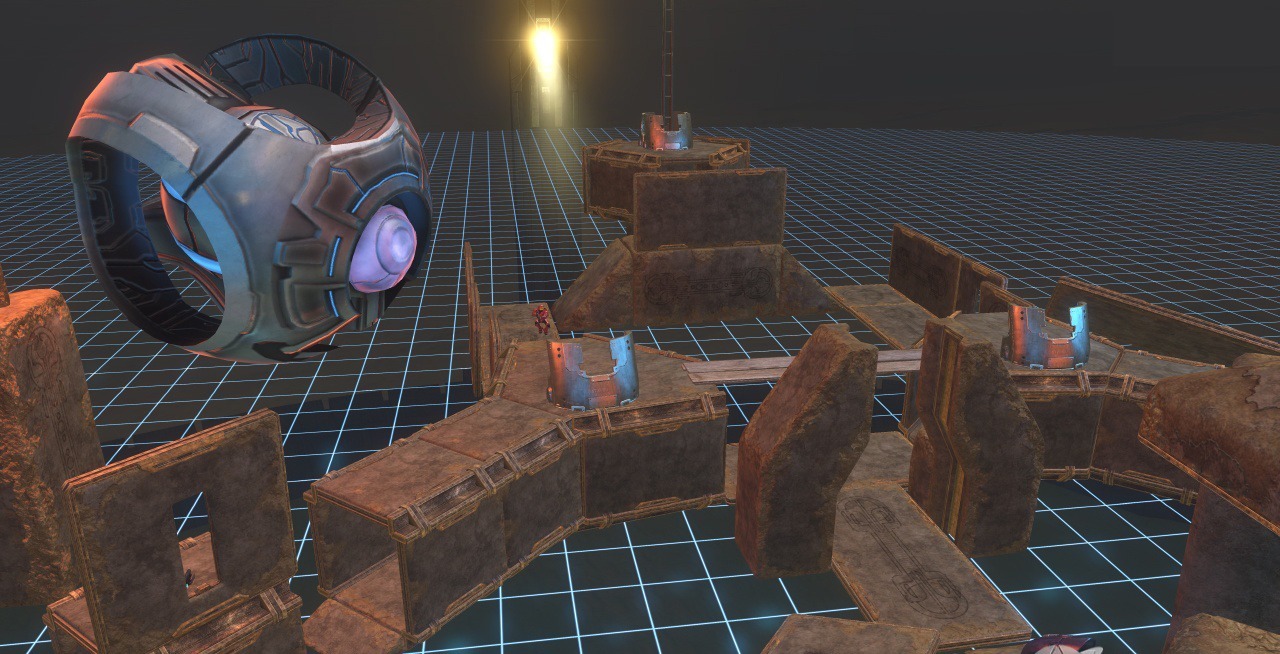
Recognizing the time and effort Forgers were putting into maps, Bungie began cycling community-created maps into multiplayer matchmaking, allowing fan creations to become an important part of extending the longevity of the game. As the sheer amount of quality maps that were submitted began to increase beyond their capacity to handle, Bungie reached out to select members of the community, asking them to sort through and review player-created maps for addition to matchmaking, creating The Community Cartographers. Since 2008, community support has encouraged increasing creation of more content with each title.
Forgers didn’t just use the mode for new competitive multiplayer maps. “Forge art” created by using small pieces to build large sculptures or pictures were easy to share via screenshots. Other Forgers created non-combat-oriented maps that emphasized platforming or puzzle-solving—there were massive recreations of Rube Goldberg machines, custom racetracks, or maps like Forger Pete the Duck’s seven-part obstacle course, dubbed the Flaming Ninja Challenge. Forgedevoted communities sprung up to host discussions about the game mode. ForgeHub started in October 2007 as a blog to showcase creations by college friends TrueDarkFusion and TheYavimayan. It soon grew into a forum-centered site. “The intention was to really encourage community collaboration and discussion,” former ForgeHub leader Insane54 recalled.
Bungie expanded on Forge with Halo: Reach—many of the hacks and tricks players had to undertake to create their maps became features proper, and Reach shipped with Forge World—a massive space with a variety of terrain areas to Forge in and around. Forge World was the largest map released within a Halo title up to that date. Reach also came with developer-Forged maps on-disc. “We’re doing this exactly how the fans would do it,”
Bungie artist Chris Carney noted in a trailer demoing Forge World.
As with Halo 3, players discovered unique ways to push the mode beyond its original constraints; players created functioning Skee Ball games from the basic Stockpile gametype, or game-withina-game arcade versions of Tic-Tac-Toe or Duck Hunt. Community-created Forge maps were heavily featured in matchmaking throughout Reach’s lifespan.
Halo 4’s version of Forge, developed primarily by Certain Affinity, added trait zones for customizing player abilities, cast shadows to improve map legibility, and tools for rapid construction and prototyping. It also featured three smaller Forge maps, with their own tweaked palettes of objects. Some features from previous versions like zoom and precision editing were lost, and reaction to Halo 4’s Forge was not uniformly positive; Forger Nillapuddin recalled that the changes and issues suggested that the mode didn’t feel like it was built for or by Forgers. 343 Industries addressed some of the complaints by releasing Forge Island, the first free downloadable content for a Halo game since Halo 3; its open terrain and new objects offered Forgers more flexibility.
Halo 2 Anniversary brought back elements Forgers had missed in Halo 4 and added basic object scripting and triggers, enabling complex in-game interactions and events.
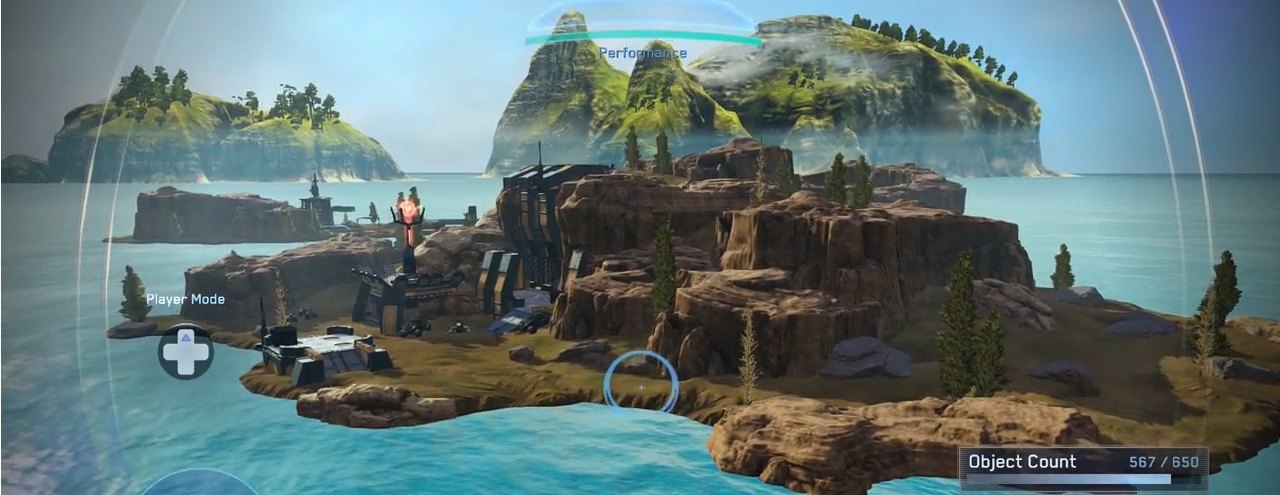
For Halo 5, 343 looked to harness the advances of the Xbox One and add all-new objects, features like grouping and welding objects together, and color palettes to offer greater player control over the look and feel of maps. Studio head Josh Holmes wrote that, “Halo 5’s Forge is the biggest evolution of the feature since the original was released with Halo 3.”4 The revised Forge did not release with Halo 5, but instead shipped in December 2015; 343 has promised additional updates to Forge after launch.
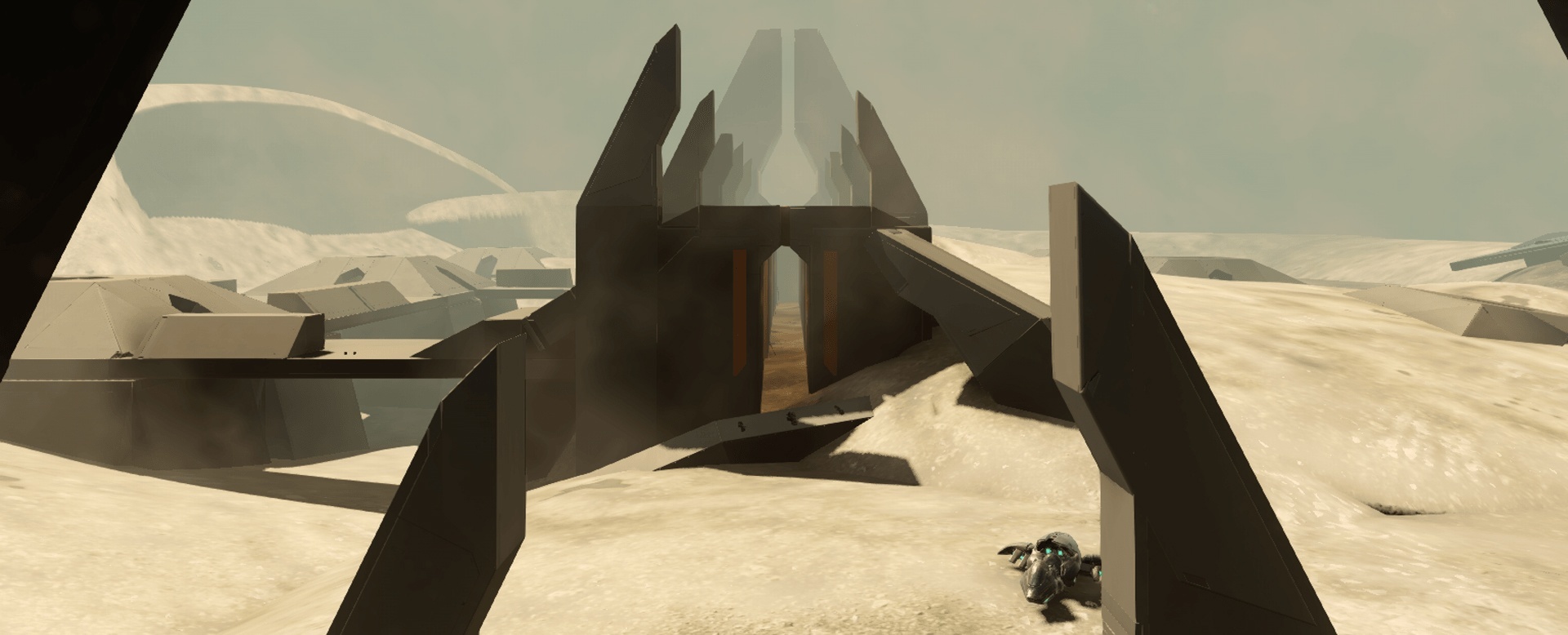
Forge, compared to PC level editors, remains more akin to constructing LEGO sets than creating a map from whole cloth. While some Halo fans see it as a weakness of Forge, others see it as a strength. “I don’t think [Forge] needs to be simplified or changed,” opined PeteTheDuck. “The base model of Forge to me is dead on. [...] How Forge functions is good, and that can be maintained and still grow as a tool.” 343 Industries employee Jeff Easterling said, “I’m often more impressed by what people do in Forge than what people do in a more expansive map editor on a PC game, because you have less to work with—so when you see something that is particularly creative and inventive, it really stands out.”
Forge has been an essential element to the longevity of Halo titles—a way for fans to supplement content produced by the developers, as well as create content that the developers would never even think of making. In return, the developers have to continue to improve Forge, and the social and sharing features around it, to make it easy for quality content to be recognized and found by other players. The power of players to create rich experiences for themselves is only limited by the tools they have at their disposal.
WHERE TO PURCHASE
A hardcover copy of the book can be purchased online via Lulu.com for $28.
Community Evolved Book Preview: Forge
Discussion in 'Articles' started by WAR, Mar 22, 2016.
Tags:
Comments
Discussion in 'Articles' started by WAR, Mar 22, 2016.
XenPorta 2 PRO
© Jason Axelrod from 8WAYRUN.COM